

Winter heralds rest and celebration
Winter is a season characterised by its cold temperatures, shorter days, and often transformative landscapes.
This time of year typically spans from December to February in the Northern Hemisphere, though its exact timing can vary based on geographical location. The onset of winter brings about significant changes in both the environment and human activity. Snow blankets the ground in many regions, creating picturesque scenes that have inspired art and literature
throughout history.
Additionally, winter's chill prompts various adaptations among flora and fauna as they enter dormancy among flora and fauna as they enter dormancy, species of wildlife migrate to more temperate climates.
The impact of winter extends beyond environmental changes; it also affects human behaviour and culture. Traditionally, winter has been a time for introspection and reflection. Many cultures celebrate festivals during this season that emphasize themes of light amidst darkness, such as Christmas. They invariably involve communal gatherings that foster social bonds and provide warmth during the cold months.
Wild pond build by RTN lead, Mark Bolton
As mentioned in our last issue, the wild pond is now boasting life and as such represents the builds completion. However, it was thought that a great learning opportunity for
RTN members was afoot. So the team are now creating a learning area.
They intend to put up a sign showing the possible life a wild pond could hold. They also will be documenting what is actually living there and complete studies into the needs of these creatures to ensure that this rich biodiverse area remains sustainable and compliments the life that is there.
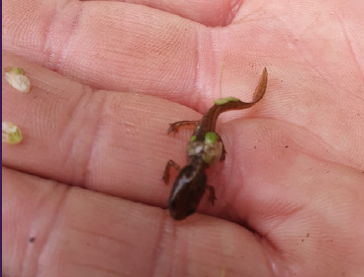
A further addition was the creation of toad hole habitats to the rear of the pond. These underground habitats offer a damp safe refuge for toads and newts. Their close proximity to the
pond area allows them to stay close to food sources and keeps the area damp.
Willow yurt written by Kev
One of our current projects at Shipley Park is growing and making our own willow yurt.
The idea to start this project came about a few months ago. We wanted to create a covered, quiet space where people could have some time out but not be completely away from the rest of the group.
As for new people and those of us who are neurodivergent, we can become anxious and just need a quiet place to go to decompress before rejoining, especially when there’s a
lot going on with the other projects at RTN.
We didn’t want to just build a typical structure like a cabin or a shed. We wanted something that would seamlessly be a part of the surrounding area and capture the heart of
what RTN is all about. I came up with the idea of using the skills we have learnt through RTN and the horticulture course led by Broomfield College, to cultivate our own willow branches. This will allow us to grow our own living, sustainable structure that will not only be a wonderful space for us to use, but be a great habitat for local wildlife too!
Once the structure itself is completed, we have plans to make a sensory garden surrounding the yurt. I believe this will be beautiful and beneficial addition, as a sensory garden can help stimulate all of our senses, helping us feel calmer and more relaxed. This will be really useful for all of our group members, especially those who are neurodivergent. The sensory garden will also help to create a more diverse wildlife area.
Currently, we are in the initial stages of growing our willow yurt. The main structure supports are ready to be planted. We will then begin the process of weaving willow around the frame, where it will start to grow into the finished structure. This will be a lengthy process, one that we will keep you all updated over the coming months.
Are there hedgehogs in Buxton? written by Matt
This summer we created a habitat at our Buxton site to try and encourage hedgehogs to add to our wildlife diversity potential.
We built a hedgehog house from some old offcuts of wood and used some roofing felt to make a waterproof roof. We have lined the house with some newspaper, sawdust and some dried leaves to try and make the habitat as natural, comfortable and also a safe environment for the winter hibernation period.
So far we have not had any visitors but we have had a mild autumn so there is still a possibility to attract a winter guest.
Hedgehog Facts
Nocturnal: They most active at night and sleep in dens made of leaves and grass during the day.
Hibernation: In cold climates they hibernate during the winter months.
Diet: Hedgehogs are carnivores and mostly eat insects, worms, snails and sometimes small mammal or eggs. (If you are lucky enough to have a hedgehog living in your garden only feed it cat food, meat not fish).
Social Structure: These creatures are generally solitary animals only coming together to mate.
Self-Anointing: They lick on something with an unusual scent to create frothy saliva that they spread on their spines. It is believed they do this as part of their defence mechanism.
Lifespan: In the wild they typically live for two to five years, but are known to live longer in captivity due to a regular food source and security of a sanctuary.
Offspring: Baby hedgehogs are known as hoglets.
Humorous anecdotes, compiled by Jill
I LOST MY SOLE!
Recently on a beautiful day we gathered our troops and set out on a conservation forestry walk to locate the fruits of the medlar bush. We hadn't gone many steps when one of our group encountered a problem. The sole of her walking boot decided it no longer wanted to participate on the walk. Whilst the crocodile impression it gave us was mildly amusing, it did cause a small problem. What to do!!!
Turn round and go back? Absolutely not. So the RTN motto sprung to mind.
IMPROVISE - The sole was of no use partially attached to the boot so we took it off.
ADAPT - We changed the design of the boot to suit our surroundings. It was dry so not having a sole on the boot was not a problem in the short term.
OVERCOME - We overcame a negative situation and changed it into a positive which benefited the boot wearer and her colleagues around her.
We successfully completed our walk with all troops accounted for and with the fruits of the medlar bush on board ready to Blet!!! (Look out for more information about the Medlars)
The forest walk also promoted something else that RTN is good at.......LAUGHTER. RTN is really good at laughter!
THE STRAY DOG
On a typical RTN Day, the team was busy with various projects and making good pace, when from the woods surrounding us the sound of a voice filled the air.
“ROGER” the voice shouted, no one thought much of this as many people may be heard shouting a name or two. After a very short silence the voice again could be heard but this time closer. “Roger” (a short pause). “Roger” ( a short pause). “Roger!" It was quickly assumed that Roger, whoever Roger is, was missing!
The voice continued its calling, at the very same time from the forest appeared a rather scruffy looking dog. Without the skills of Sherlock Holmes, the team quickly surmised that this bedraggled creature must be Roger.
The dog was happy to see us and even answered to the name Roger. Brilliant, we will keep hold of him and locate the owner. A team was quickly dispatched into the forest to find the owner.
Several minutes later they returned with a woman in tow who was carrying a dog lead with no dog on the end. She looked at Roger who was now tucking into parts of everyone's lunch, said “That's not Roger” and promptly left, leaving us with this somewhat scruffy, yet friendly dog. What was the chance of that the only loose dog for miles and the only person searching for Roger and it was not this dog?
All was well as the owner was eventually found. I feel confident that Roger was also located.
The forest floor is alive! by volunteer Jill
As the leaves are falling in autumn, nature is flooded with a beautiful array of colours. And naturally we are drawn to look and enjoy the falling leaves whilst out for a walk .We will look straight ahead or up at the trees.
Recently RTN has taken on a new conservation project at Rosliston Forest Centre, which is an amazing place to see the seasons changing before your eyes. The changing season is beautiful to see. Maybe take time in the the forest to look down at the fallen leaves on the forest floor.
The leaf fall creates a whole new habitat for small creatures including spiders, millipedes, centipedes and black beetles. These creatures are incredibly important to the health of the forest as the small creatures provide food for birds and small mammals like badgers.
So if you’re out on your walk and you’re not scared of spiders ????️ take time to have a look under the leaves. See what’s there. Say “hello” to a passing black beetle!
Please remember to replace any leaf mulch that you move as it really is important to the creatures and the forest.
Winning north of the border
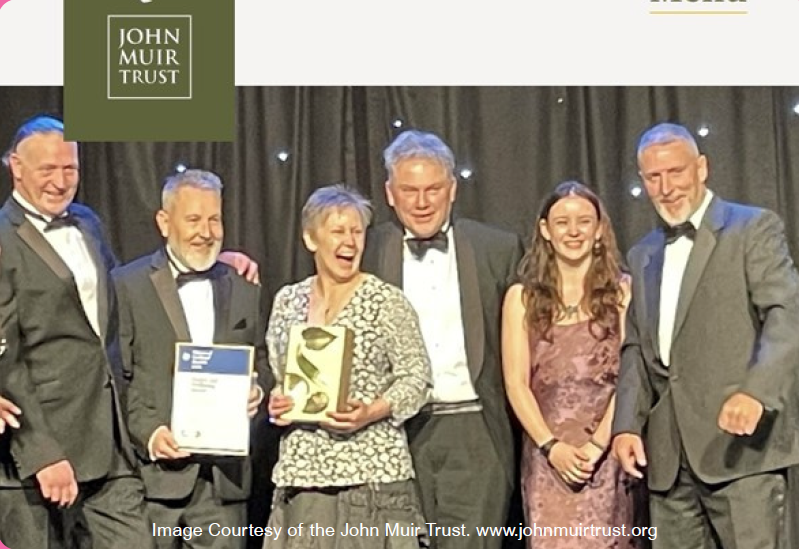
Every year, a team from the RTN project in Derbyshire attends the John Muir Trust site in Glenlude on the Scottish Borders.
The team works tirelessly to help set up the annual tree plant, this tree plant is supporting the re-introduction of broadleaf trees into their native lands, as a result this creates habitats for an array of animals from birds including eagles to pine martens. The biodiverse area is awash with wildlife.
The Derbyshire team has supported this project for many years. The project, attended by people from all over the country, sees people work together to plant around 350 trees, working in an environment that offers such positive experiences for all.
This year, the project known as Recovery Through Nature, Phoenix Forest in partnership with the John Muir Trust, had been shortlisted for the prestigious Nature of Scotland awards.
The event was attended by our RTN leads Mark, Sean, Jill from Derbyshire, Jon the founder of RTN nationally along with representatives of the John Muir Trust.
Our entry was in the health and wellbeing category. I can happily report that we are winners! All the other finalists in this category were very deserving of winning this prestigious award. So, you may imagine how honoured we are to have won.
A massive thank you to Wild Scotland awards and the evening's hosts, the RSPB for putting on an amazing event.
Swadlincote hits the ground running
RTN Swadlincote has finally arrived! Based at Rosliston Forestry centre, the team of three people on day one has grown in number each week.
The project at Rosliston has seen some learning in forest management courtesy of the local Forestry Commission. The team has been involved in crown lifting an area of the forest. Crown lifting is removing the lower dead branches of the trees in the forest. This allows more light and airflow into the forest which ultimately benefits the trees and wildlife.
What about all of the cuttings? We gather them into three different piles and then transport them to another area of the forest where we have been creating box habitats. These habitats allow beneficial insects to move into the forest. These insects not only serve their own purpose with the mulching of woods etc they also provide a food source for birds and other small mammals. It is hoped in time that we can create a haven for hedgehogs in this area.